Technical guide
Complete guide to screw conveyors
Published on May 29, 2025 · Demakine Team

This complete guide to screw conveyors explores the main aspects of this equipment, including its types, components, operation and good operating practices. Screw conveyors are widely used in many segments of industry, especially for moving grains, powders and bulk materials. With their efficient helical system, they ensure continuous, safe conveying that is easy to maintain, and are essential for optimizing logistics and production processes.
What are screw conveyors?
Screw conveyors, also known as helical screw conveyors or grain augers, are machines used to move bulk materials continuously. Their operating principle is simple but extremely efficient: a metal screw flight installed inside a tube or trough turns on its central shaft, moving the material in the desired direction.
This type of system is widely used in industrial production lines, especially for conveying powders, grains, granules, corn, feed and other dry materials.
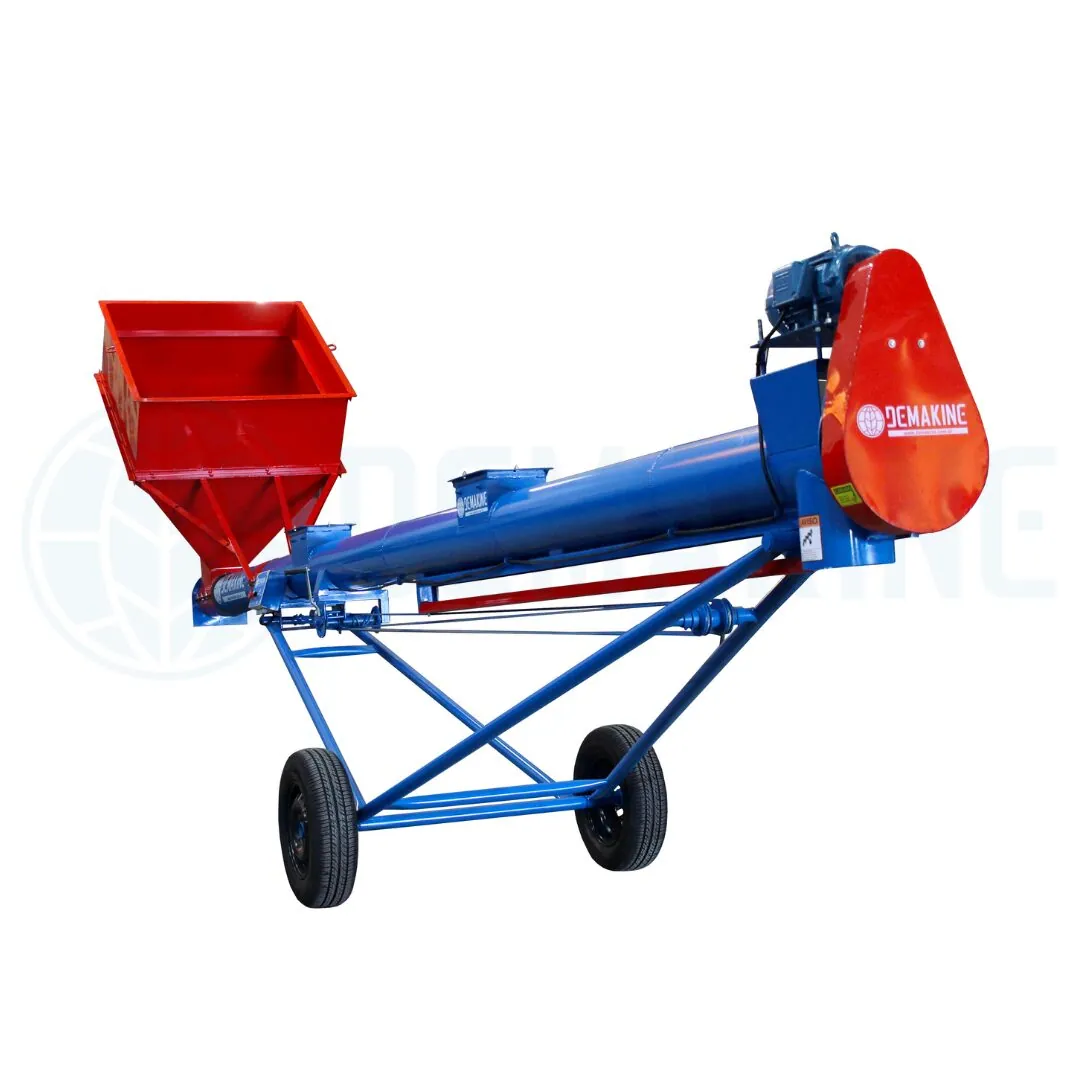
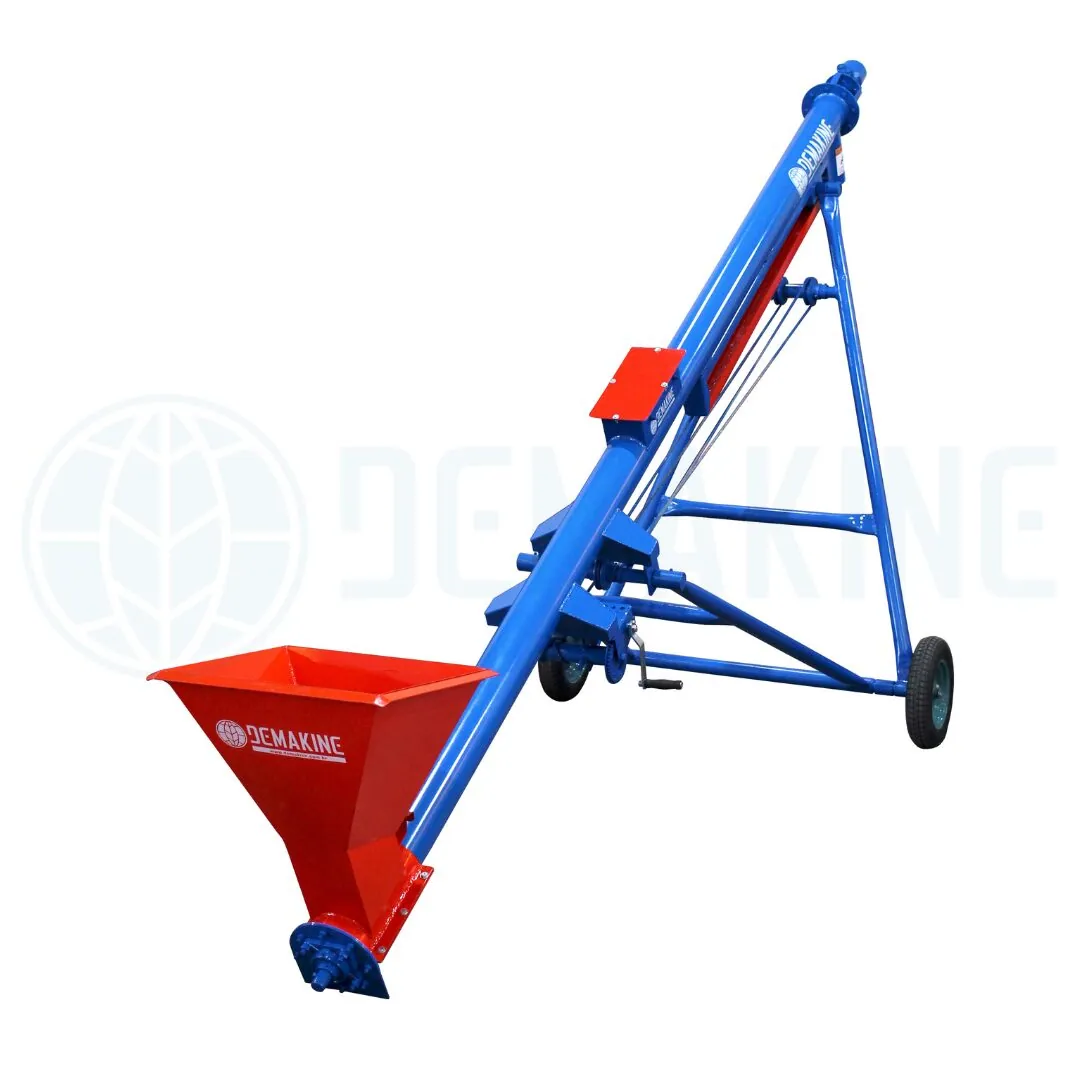
Structure of the grain auger (chupim)
Wheels and tires
Make the auger easy to move, allowing fast, safe travel.
Manual lift
Allows the auger's height to be adjusted practically and precisely, according to the needs of the operation.
Screw flight
Internal spiral element responsible for conveying the material along the auger tube.
Mobile hopper
Receives the material to be conveyed and can be positioned according to the demands of the application.
Intermediate bearing
Supports the screw shaft, reducing wear and ensuring stability in operation.
Motor
Electric motor that transmits power to the screw through a pulley system.
Options:
•Special receiving hopper;
•220 V single-phase motor;
•Electric lift;
•Tractor power take-off (cardan shaft);
•Fixed feet support.
How does a screw conveyor work?
A screw conveyor works through the helical movement of the internal screw. This rotation is driven by an electric motor, usually coupled directly or through speed reducers. As the screw turns, it pushes the material along the trough or tube.
Conveying efficiency will depend on a few factors:
•Type of material (weight, particle size, abrasiveness)
•Angle of incline
•Screw diameter and pitch
•Rotation speed
•Length of the path
Conveying is uniform and continuous and can easily be adjusted for dosing or controlled loading.
Why use screw conveyors?
Screw conveyors are widely used because they offer a compact, safe system that is easy to maintain. They are ideal for conveying bulk materials with precise flow control, taking up little floor space and requiring relatively low energy consumption.
Companies in the food, chemical, agricultural, pharmaceutical, mining, construction and waste treatment sectors are just some of those that benefit from using this equipment in their processes.
Types of screw conveyors
Standard screw conveyor
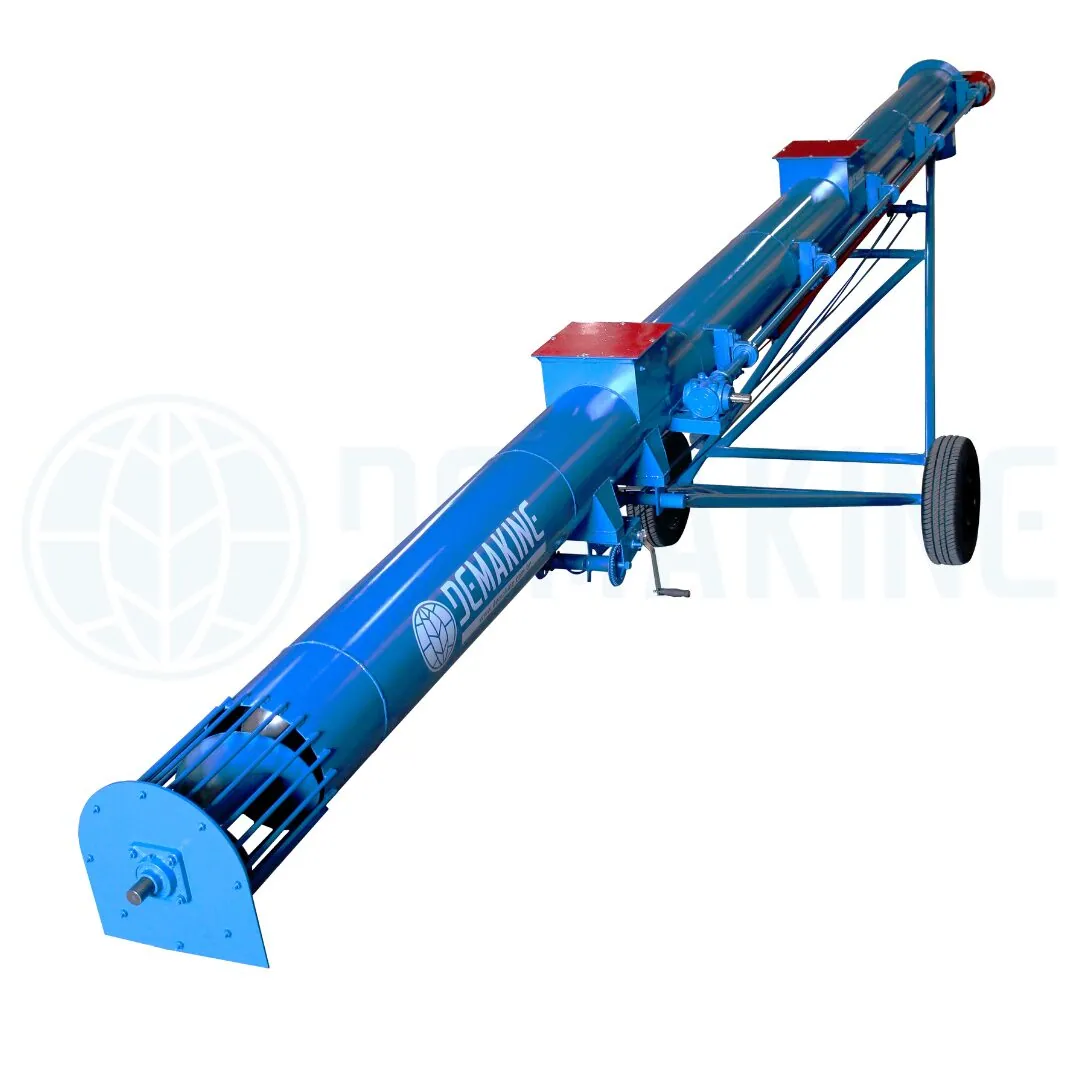
The standard screw conveyor is the most widely used model, made up of a metal tube with an internal screw flight, driven by an electric motor. Its function is to convey bulk materials continuously. It is widely applied in industries, warehouses and farms, where grains, feed, fertilizers, powder or other materials need to be moved. It is an efficient solution, easy to install and excellent value for money.
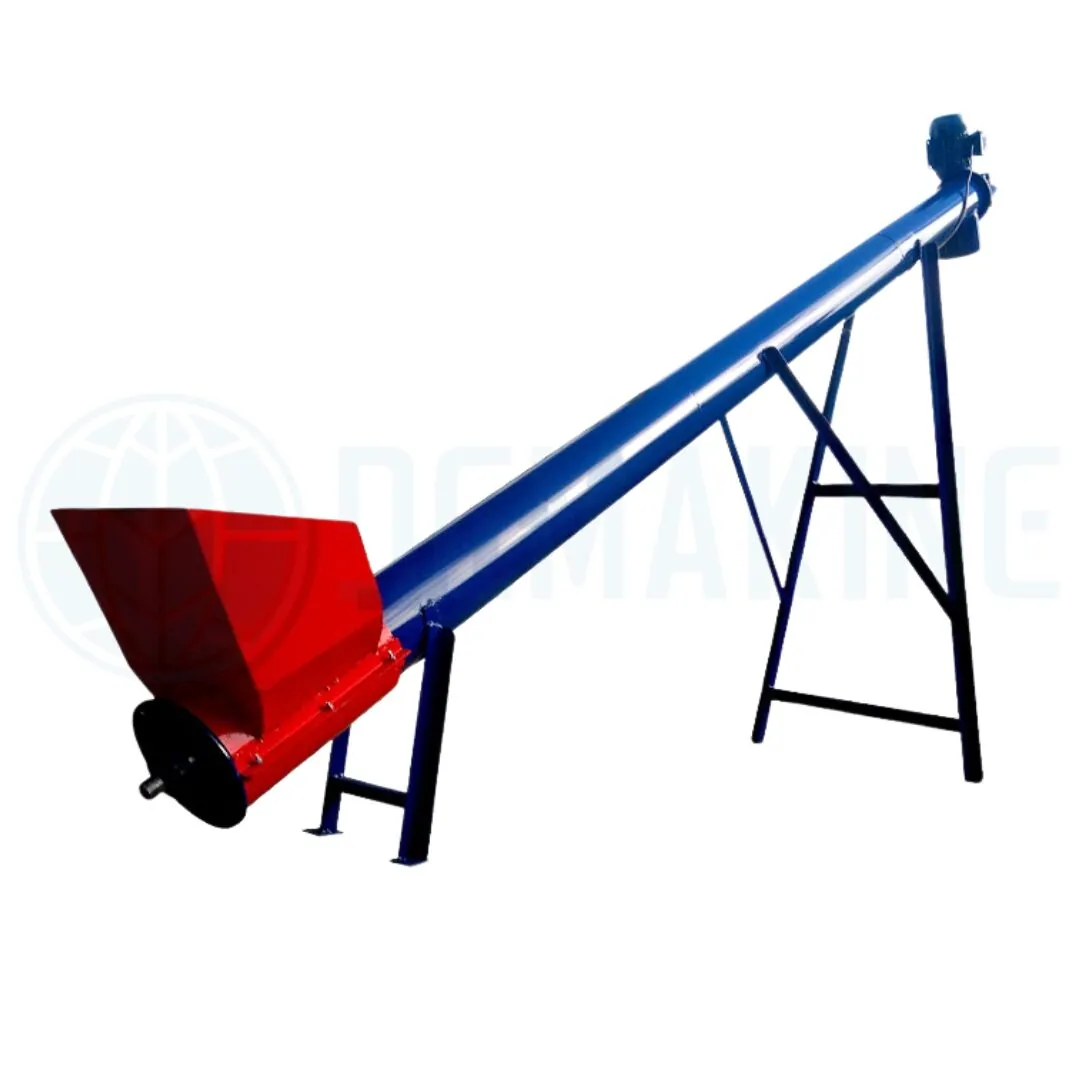
Screw conveyor with fixed feet
This model has a support structure with metal feet welded or bolted to the body of the screw conveyor. The absence of wheels or joints makes it ideal for static installations, where the equipment will always be used in the same place. The fixed feet ensure stability and operating safety, especially in processes that require precise positioning of the discharge.
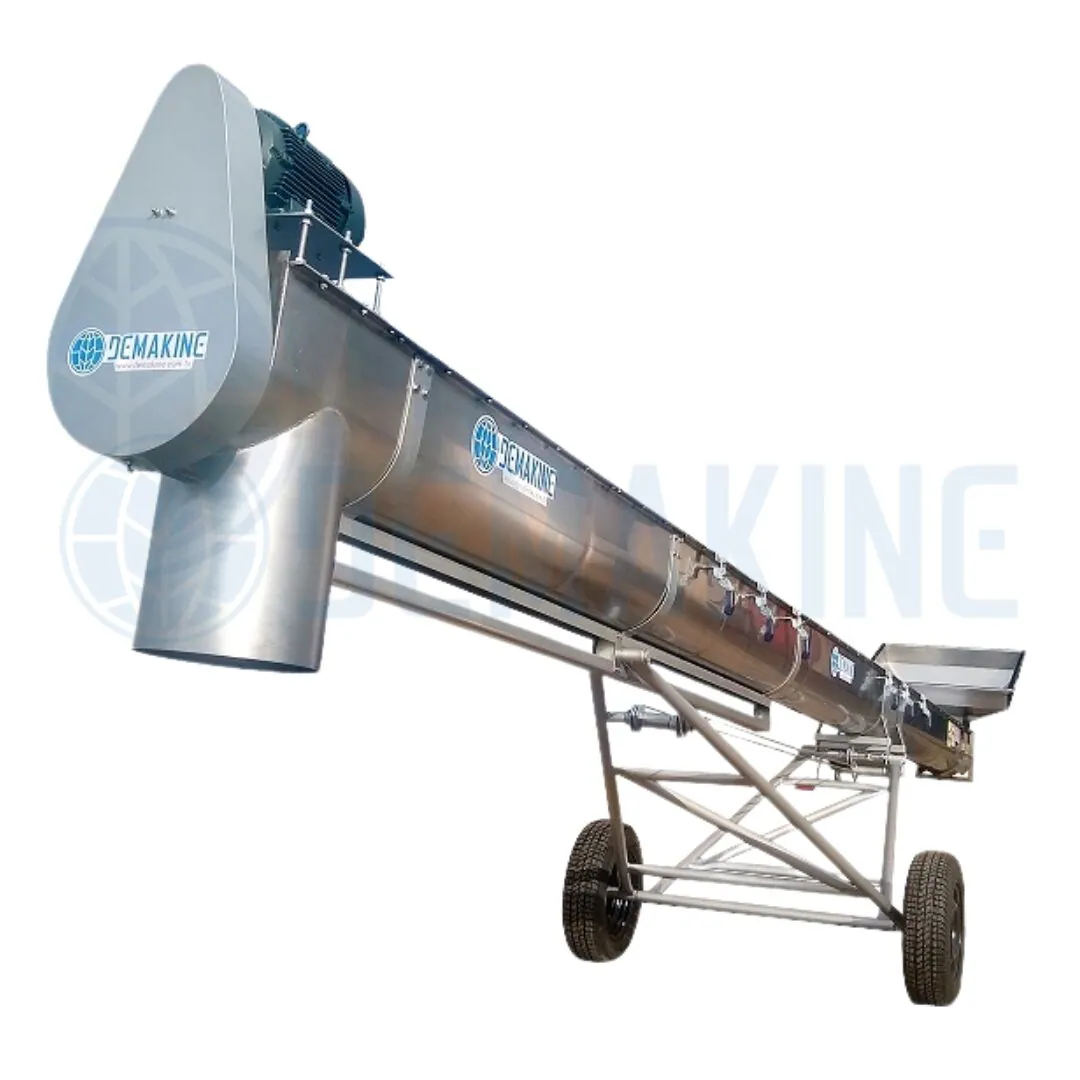
Stainless steel screw conveyor
Designed for environments with strict sanitary requirements or exposure to corrosion, the stainless steel screw conveyor is resistant to moisture, chemicals and contamination. Its use is indispensable in sectors such as the food, pharmaceutical and chemical industries, where hygiene and durability are essential. In addition, the stainless steel finish makes cleaning easier and ensures compliance with food safety and sanitary standards.
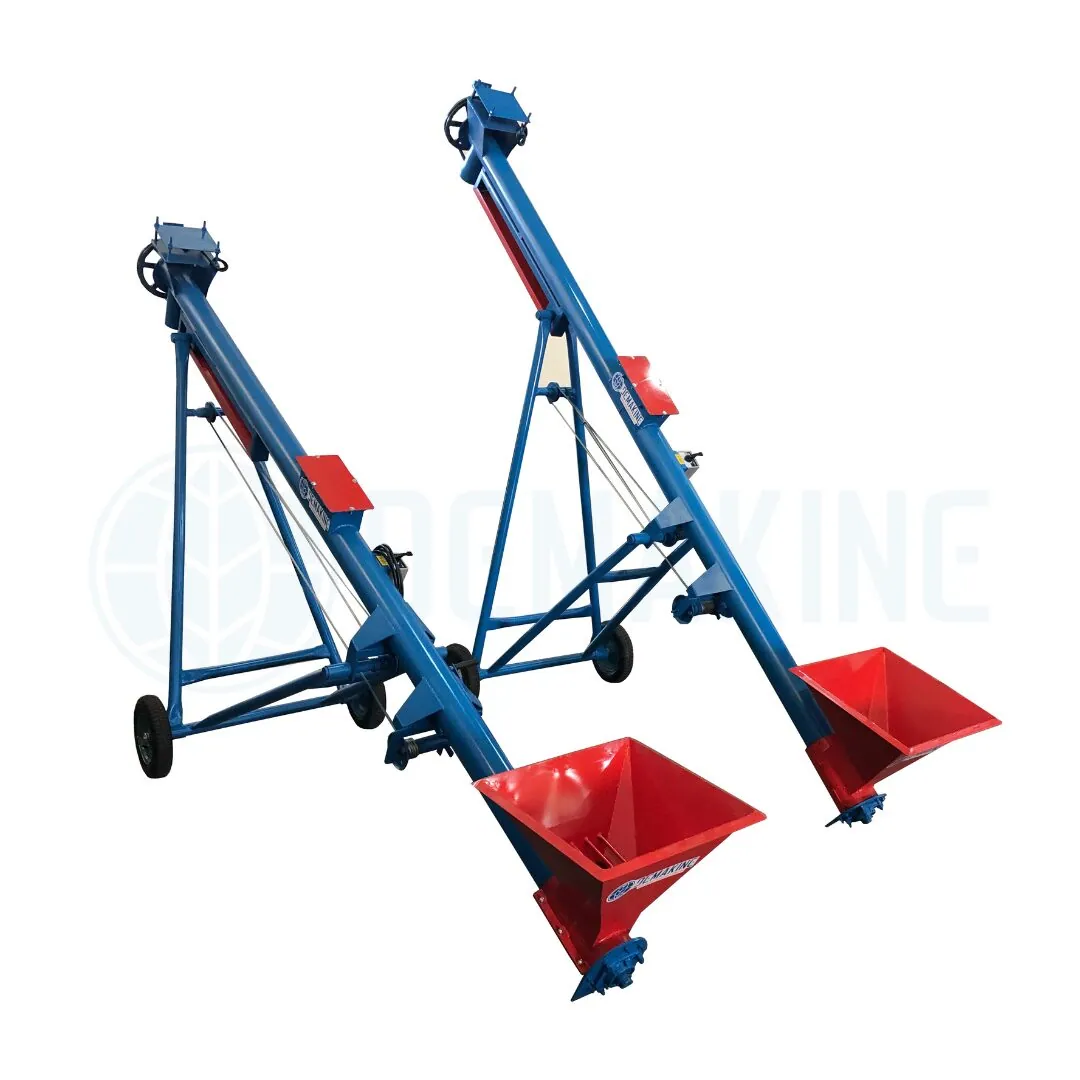
Screw conveyor with special hopper
This type of screw conveyor is equipped with a custom hopper, designed according to the needs of the process. The hopper can have greater receiving capacity, a widened mouth or even a bag-ripping function. This adaptation allows a continuous load flow, reduces material losses and improves the screw conveyor's performance in specific operations, such as receiving big bags or collecting fragile products.
Screw conveyor with hydraulic motor
The version with a hydraulic motor is recommended for mobile applications or environments where electricity is not available. The motor is powered by a hydraulic system, usually coupled to tractors, trucks or other machines. This configuration offers high torque and sturdiness and is ideal for heavy work in the field or in construction, keeping the operation autonomous in remote areas.
Screw conveyor with tractor power take-off (cardan shaft)
This model is driven directly by the power take-off of farm tractors, with no need for its own electric or hydraulic motor. It is widely used on crops and farms, especially in the harvesting and storage of grain. Its structure is adapted for rural transport, allowing easy movement between different work areas.
Screw conveyor without feet
The auger without feet is a light, compact option, designed to be coupled directly to existing structures or inserted into silos, troughs or machines. With no support structure of its own, it takes up less space and offers more freedom in the installation layout. It is very useful in industrial applications that require integration with fixed equipment or automated systems.
Trough Conveyor
Unlike tubular screw conveyors, the trough conveyor has an open, U-shaped structure, where the screw turns in plain sight. This shape makes visual inspection of the process, cleaning and maintenance of the equipment easier. It is used when constant visual control of the conveyed material is needed or when the material has characteristics that require ventilation or less confinement.
Besides the standard models, Demakine develops fully customized screw conveyors, adapted to the specific needs of each customer or process. These customizations can involve changes in length, diameter, type of hopper, discharge shape and type of drive (electric, hydraulic or mechanical), among others. These made-to-measure solutions are ideal for special applications, such as environments with space constraints, integration with existing machines or handling of materials with specific physical properties (abrasive, fragile, etc.). The custom screw conveyor offers greater operating efficiency, safety and use of the layout, becoming a competitive advantage for industrial or agricultural operations with unique demands.
Benefits of the grain auger
1.Efficiency in conveying materials: screw conveyors are extremely effective for moving bulk materials, such as grains, powders and meals. With continuous operation and low energy consumption, they optimize the workflow, increase productivity and contribute to operating savings on industrial and agricultural lines.
2.Flexibility of application: screw conveyors adapt easily to different installation layouts. This versatility makes the equipment ideal for many sectors, from the food industry to applications in the field, even in tight spaces or on complex paths.
3.Low maintenance and high durability: with a simple structure and few moving parts, screw conveyors need little maintenance and have fewer failures. This ensures greater equipment availability and reduces the cost of unscheduled stoppages and frequent repairs.
4.Clean, safe environment: the usually enclosed structure of screw conveyors prevents dust from spreading and the conveyed material from being contaminated. This is especially important in sectors such as food, pharmaceutical and chemical, where hygiene and safety are fundamental to process quality.
5.Integration with other systems: screw conveyors can easily be integrated with other equipment and automated systems, such as silos, hoppers, bucket elevators and dosing scales. This connectivity allows more efficient production flows, reducing the need for manual intervention and improving process control.
6.Resistance to harsh environments: available in materials such as carbon or stainless steel, and with the possibility of special treatments, screw conveyors withstand severe operating conditions, such as abrasion, temperature variations and contact with chemicals. This ensures a long service life even in challenging industrial environments.
7.Excellent value for money: besides efficiency and durability, screw conveyors are simple to install and intuitive to operate. With the right design, they can run for long periods with consistent performance, offering an economical, reliable solution for the internal conveying of materials.
Sizing, construction materials and operating care
Designing a screw conveyor correctly is essential for the system to work efficiently, safely and durably. In this part of the guide, you will understand the main technical parameters that must be considered in sizing, as well as the materials most used in manufacturing and practical tips to extend the equipment's service life.
1. Sizing factors
The design of a screw conveyor must take into account:
a) Type of material conveyed: each material has distinct physical characteristics (density, particle size, abrasiveness, flowability, tendency to compact), which directly influence the diameter of the tube or trough, the rotation speed, the motor power and the operating angle
b) Conveying capacity (flow rate): it depends on the screw's useful section, the screw speed and the degree of internal filling. A common mistake is to oversize or undersize the capacity, compromising performance.
c) Total length and incline: the greater the length and the incline, the greater the effort required from the motor and the greater the loss of efficiency. It may be necessary to use intermediate bearings for long distances, or segmented screws.
d) Frequency of use: equipment that operates continuously requires a sturdier design, greater wear resistance and a drive with good heat dissipation.
2. Construction materials
The choice of materials that make up the screw conveyor's structure directly influences the durability, safety and sanitary suitability of the equipment.
a) Painted carbon steel: more affordable, recommended for dry materials and environments without high humidity; it requires preventive maintenance against corrosion.
b) Stainless steel: excellent corrosion resistance, ideal for the food, chemical and pharmaceutical industries; it meets sanitary standards.
c) Galvanized steel: intermediate protection against oxidation, recommended for moderately harsh environments; a more economical alternative to stainless steel.
3. Installation and operating care
Even with the best sizing and materials, the success of the application depends on good practices in using the equipment:
Install on a firm, level surface: this avoids vibration and shaft misalignment.
Keep the motor correctly sized: constant overloads cause wear and shorten service life.
Clean periodically: especially important to avoid build-up and cross-contamination, mainly in screw conveyors that handle different products.
Lubricate housings and bearings: preventive lubrication ensures stable performance and avoids premature wear.
Follow safety standards: workers must be protected against rotating parts, and the equipment must have physical guards in accordance with Brazilian standard NR-12.
Main applications
Helical screw conveyors are present in many industrial sectors because of their versatility, efficiency and ease of adaptation.
In the food industry, they are widely used to convey flour, sugar, grains and cereals, as well as to dose ingredients on mixing lines. In these cases, models made of stainless steel with a sanitary finish are common, as they prevent contamination and meet the sector's hygiene requirements.
In the feed sector, screw conveyors play an important role in feeding silos and mixers, especially for flow control in diet formulation systems. Because of the abrasive nature of materials such as corn or soybean premix, solutions with greater mechanical strength are applied.
Agribusiness also benefits widely from screw conveyors, especially in loading and unloading grain from silos and in transfers between hoppers, dryers and elevators.
In the chemical industry, screw conveyors are used to convey dry powders and granules, with the advantage of avoiding dust emissions thanks to sealed tubular structures. They are often built with materials resistant to chemical corrosion, ensuring durability and safety in operation.
Construction is another sector where screw conveyors perform very well. They are used to handle cement, sand and lime; models with reinforced flights to withstand highly abrasive materials and bag-ripping hoppers are common. They also make it easier to feed concrete mixers and silos.
Conclusion
Screw conveyors are a sturdy, efficient and versatile solution for conveying bulk materials in many industrial sectors. From simple applications to highly customized projects, this equipment offers reliable performance, easy integration with other machines and excellent value for money. The different models meet the most varied operating needs, always with a focus on safety, durability and process efficiency.
In addition, with a good design and the right choice of materials, screw conveyors can operate with little maintenance and high resistance to severe conditions, which extends their service life and reduces unexpected stoppages. Whether in the field, in the factory or on production lines, the helical screw conveyor remains a strategic choice for those seeking to improve the handling of materials with quality and reliability.
Investing in well-sized equipment and counting on an experienced manufacturer like Demakine are fundamental steps to ensure the success of the application. With the right support, the screw conveyor is not just a component of the process but a powerful ally for the performance of your operation.
Gallery
Need to apply this to your operation?
Our engineering team assesses your process and recommends the right equipment, including custom-built projects.