
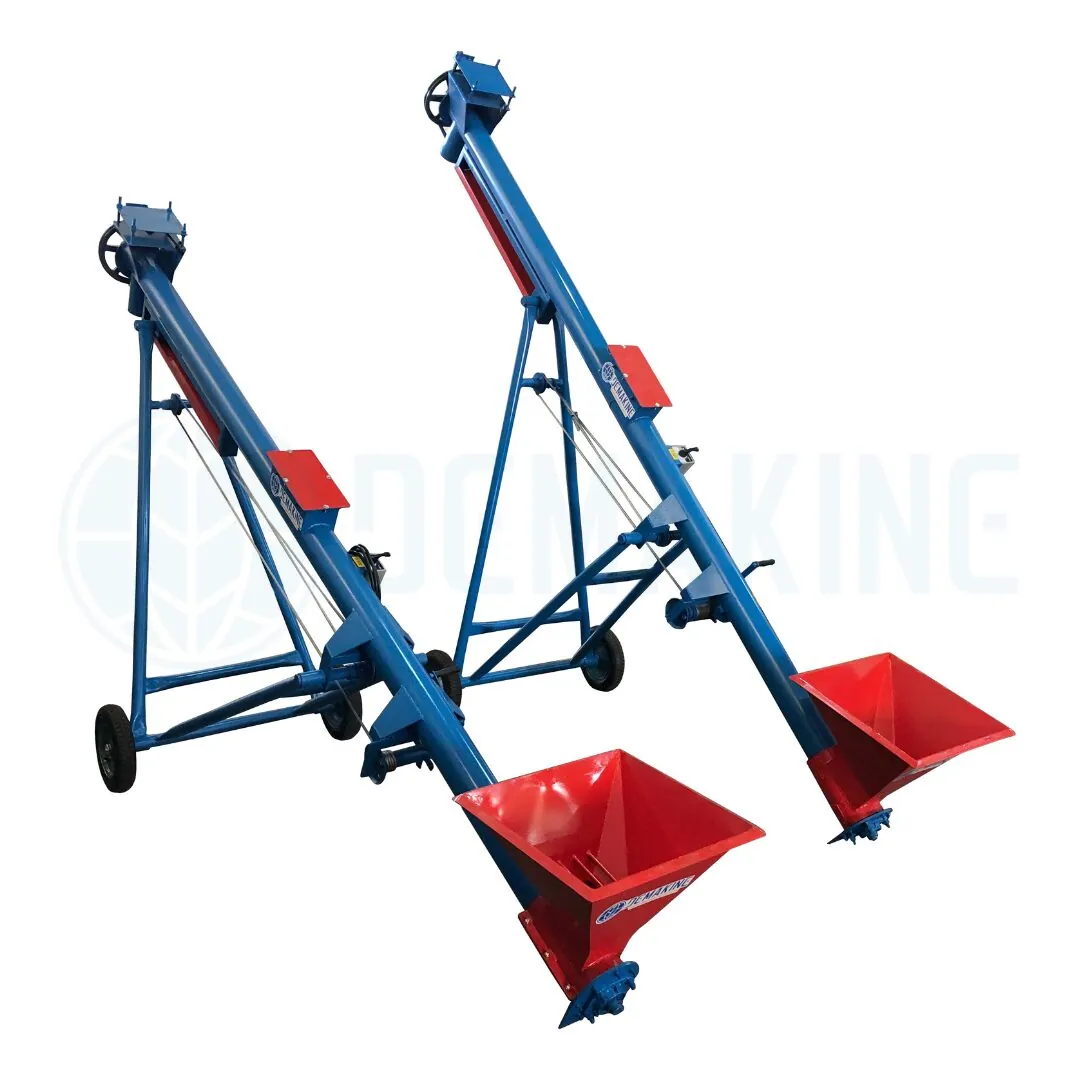
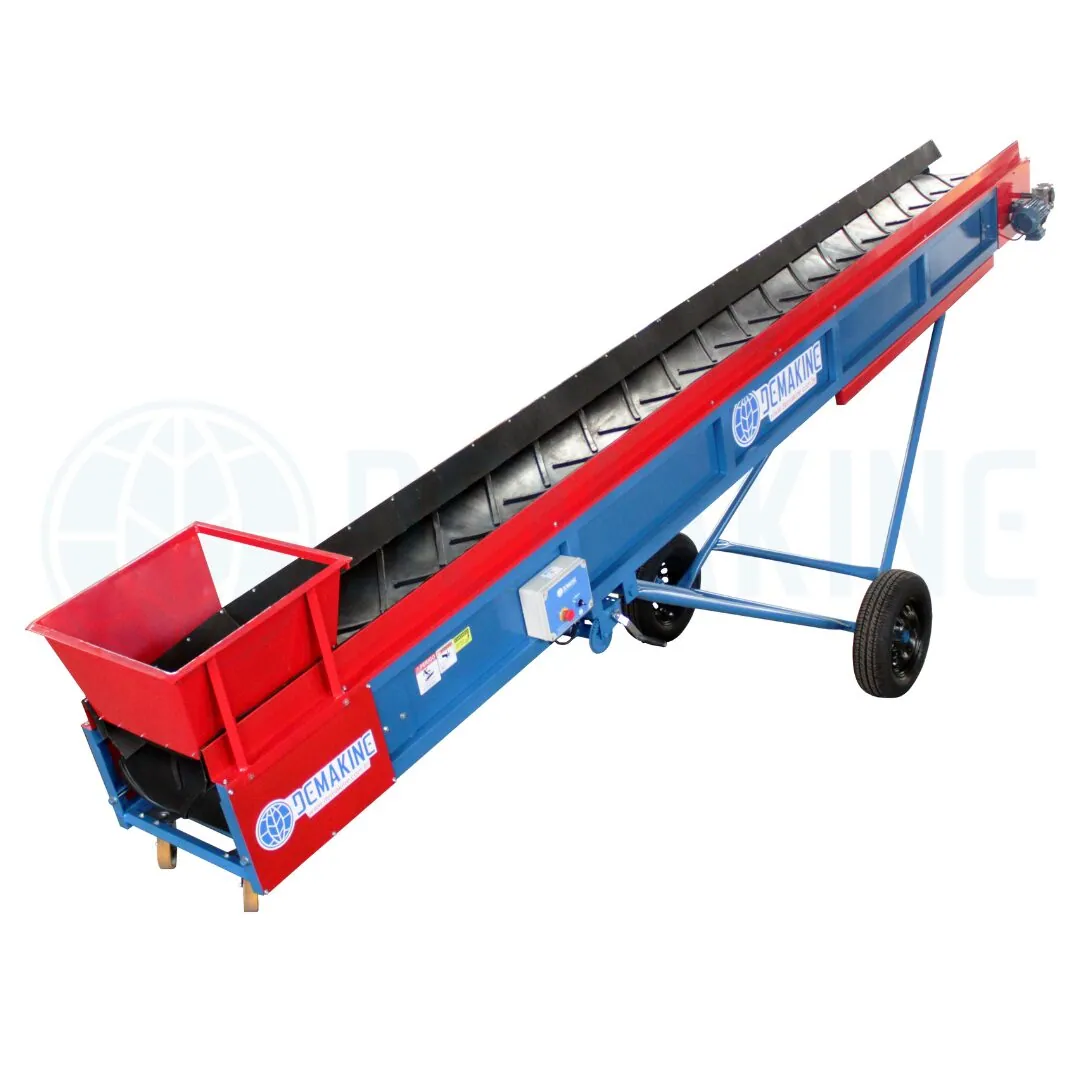
Real factory photos in sequence: hover over the image (or drag on your phone) to see the equipment from every angle.
Screw Conveyor
The Screw Conveyor speeds up the loading and unloading of mills, silos, trucks, bagging machines, extruders, injection molding machines and more. It is also needed for the continuous conveying of cereals, grains, feed, granulated plastic resins and chemicals, cutting labor costs and increasing productivity, and turning into minutes what used to take hours.
Applications
6 models available as standard, plus custom adaptations when your layout calls for them.
Real videoScrew conveyor for grains, corn and feed
See it running
The Screw Conveyor in operation
Real footage of Demakine equipment running, just as it leaves the factory in Limeira/SP, Brazil. It helps you understand how it works before talking to engineering.
About the Screw Conveyor
The Screw Conveyor speeds up the loading and unloading of mills, silos, trucks, bagging machines, extruders, injection molding machines and more. It is also needed for the continuous conveying of cereals, grains, feed, granulated plastic resins and chemicals, cutting labor costs and increasing productivity, and turning into minutes what used to take hours.
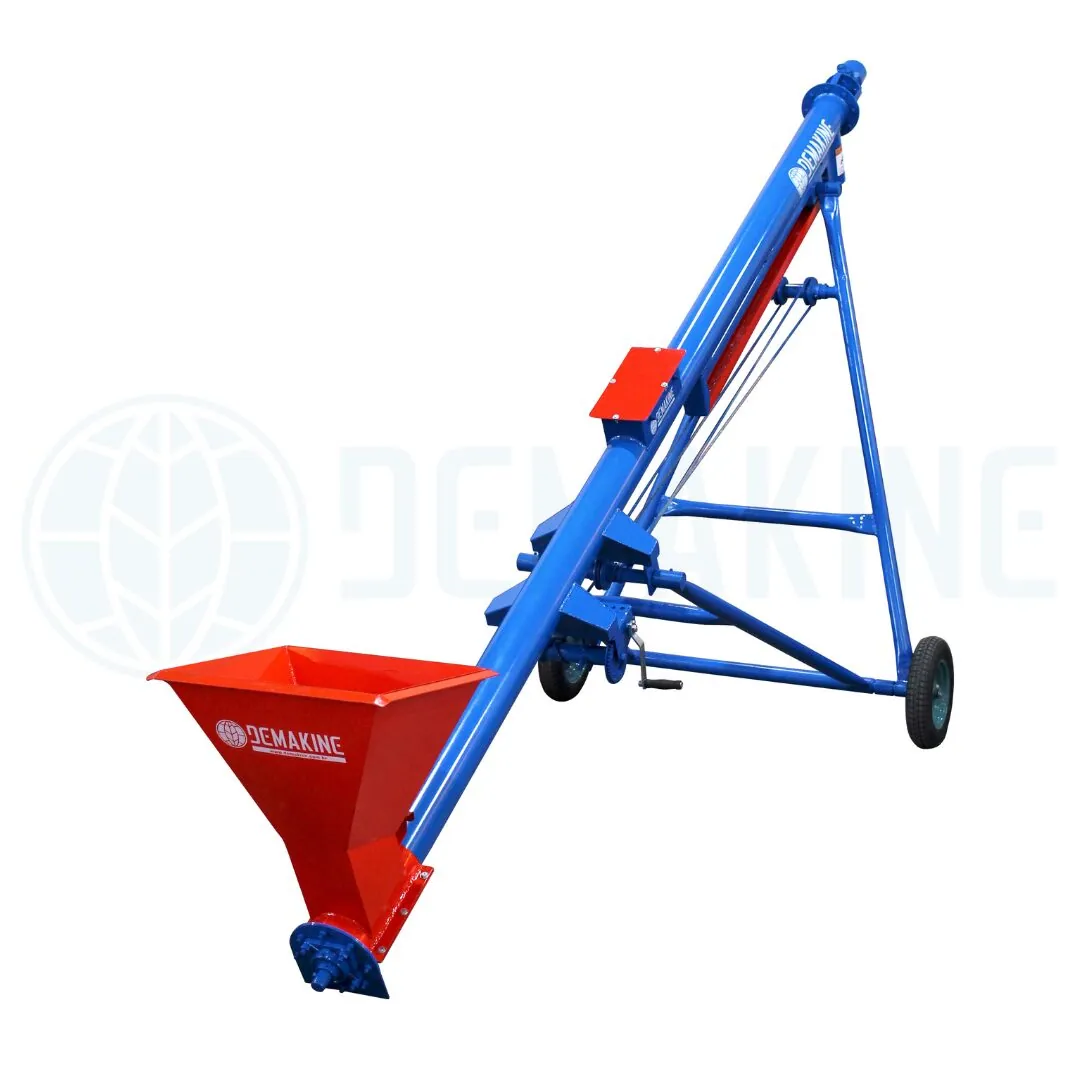
The screw conveyor works through the rotation of a screw flight inside a tube to move bulk materials. Built with industrial steel tubes, it has a light, sturdy structure that is easy to move. The conveyor tube has a drive motor with reduction through cast iron pulleys. Conveying capacity ranges from 5 to 135 t/h (or according to the project). It moves on 13″ automotive wheels and tires that let you take it quickly anywhere. The equipment has a receiving hopper and also includes a discharge hood. The lifting height of the screw conveyors can be adjusted manually with a crank or electrically through the gearmotor.
Equipment with a 12-month warranty!
Technical features
- 13″ automotive wheels and tires
- Rolled, hardened or stainless steel screw flight
- Manual ratchet lift
- Mobile hopper to receive the material
- Intermediate bearing every 3 meters
- Electric switch for operation
- Discharge hood
- Enclosed motor driving the screw, available in 220, 380 or 440 volts three-phase; in special cases the motor can be single-phase
- Speed inverter
- Without cart and wheels or with fixed support
- Single-phase 110/220 V motor
- Electric lift
- Tractor power take-off (cardan shaft)
- Mostly PU (polyurethane) paint
Specifications
Compare the 6 models
Factory reference values. Length, belt width and drive can be adjusted according to the project.
Same on every model
- Screw diameter
- 4″ a 16″
- Output capacity Ø4″
- 5 to 10 t/h
- Output capacity Ø6″
- 15 to 20 t/h
- Output capacity Ø8″
- 25 to 30 t/h
- Output capacity Ø10″
- 45 to 50 t/h
- Output capacity Ø12″
- 70 to 75 t/h
- Output capacity Ø14″
- 90 to 100 t/h
- Output capacity Ø16″
- 125 to 135 t/h
RTC5
- Length
- 5 meters
- Maximum height
- 3,5 m
- Minimum height
- 1,8 m
RTC6
- Length
- 6 meters
- Maximum height
- 4,1 m
- Minimum height
- 1,9 m
RTC8
- Length
- 8 meters
- Maximum height
- 5,5 m
- Minimum height
- 2,0 m
RTC10
- Length
- 10 meters
- Maximum height
- 6,9 m
- Minimum height
- 2,2 m
RTC12
- Length
- 12 meters
- Maximum height
- 8,3 m
- Minimum height
- 2,5 m
RTC15
- Length
- 15 meters
- Maximum height
- 10,4 m
- Minimum height
- 2,8 m
Engineering tools
Do the math before requesting a quote
The same logic our engineering team uses every day, with the models from our real production table.
Material, distance and height: get the recommended model.
Your operation
Engineering recommendation
Screw Conveyor
Required length
6.5 m
Incline
23°
Recommended model
RTC8
Motor
to be defined
Belt / screw
4″ a 16″
Capacity
to be defined
Reference values from our factory tables. Final confirmation is made by our engineering team with your line data.
Compatibility
Which material this equipment is for
A quick guide by type of load. "On request" does not mean no: it means it can be done with an adjustment of belt, profile, sealing or structural material, which is why we need to know your product before recommending.
- Grain and bulkRecommended
- BagsNot recommended
- Boxes and packagesNot recommended
- Waste and recyclingOn request
- Sand and gravelRecommended
- CharcoalRecommended
- Fruits and vegetablesNot recommended
Your material is not on the list? Describe it on WhatsApp and we will tell you right away whether this line fits or which equipment is the right one.
Maintenance checklist
Checklist for the Screw Conveyor
Most of the stoppages we attend could have been spotted earlier, in a quick walk around the machine. This is the routine we recommend for your team.
0 of 15 items
Every day, 5 minutes
- Look at the belt or the screw for cuts, tears and abnormal wear
- Check that the scraper is in contact and whether material is building up under the equipment
- Listen for unusual noise in bearings, motor and gearbox with the machine empty
- Check for product leaking outside the discharge point
- Check that the guards are in place before releasing the operation
See the manual for further information.
Every week
- Check belt tension and alignment, without tightening more than necessary
- Clean pulley, roller and scraper area
- Check the tightness of bolts on the structure, bearings and motor base
- Check that the structure is still level and supported
- Test push buttons, emergency stop and controls
See the manual for further information.
Every month
- Lubricate bearings and housings as instructed in the manual
- Review the gearbox: oil level, leaks and working temperature
- Inspect the belt splice and schedule replacement before it breaks
- Review the motor: current, heating, ventilation and mounting
- Record what was replaced and schedule wear parts for the next harvest
See the manual for further information.
Installation sheet
What to have ready before the machine arrives
When the site is prepared, the machine goes into operation on the day it arrives. This is the list we give customers when the order is closed.
- 1Space for the tube and the inletCheck the clearance for the whole tube and the position of the inlet and the outlet.
- 2Firm base at the supportsLevel supports avoid strain on the shaft and uneven wear on the screw flight.
- 3Power point at the correct voltageCircuit breaker, grounding and voltage checked before the motor is delivered.
- 4Headroom and accessCheck the height for the discharge point and the route to the assembly site.
- 5Constant feedingDefine how the product reaches the inlet. Irregular feeding brings the flow rate down.
Before you buy
3 mistakes that cost dearly in this choice
These are the mismatches we see most in machines bought in a hurry. It costs little to check beforehand and a lot to fix afterwards.
Diameter and pitch chosen without the actual material
Wet, lumpy or fibrous product behaves differently from dry grain. Tell us the moisture and particle size so the screw pitch comes out right.
Drive at its limit on a full-load start
A screw that starts with the tube loaded requires more torque. Without spare motor capacity, the start becomes a trip.
Steep incline without reviewing capacity
The steeper the screw, the lower the actual flow rate. If the incline increases after the project, the capacity has to be recalculated.
After-sales
Spare parts and consumables
Wear items we supply for this line. Having the critical parts in stock before harvest is what separates a stoppage of hours from a stoppage of days.
Need a part now?
Tell us the equipment and, if you have it, send a photo of the part. The quote comes straight from technical service.
Frequently asked questions
What people ask most about this equipment line.
See all frequently asked questions →A screw conveyor is enclosed, takes up little space and is great for powder and fine bulk. A belt conveyor is better for packaged product, large volumes and long distances. Describe the material and the distance and we will recommend one.
Yes, for products that require sanitation or in corrosive environments.
It depends on the moisture level and the tendency to cake. Tell us the actual material and, if possible, send a photo. In some cases we recommend a different pitch and finish.
By WhatsApp, phone, e-mail or any form on the website. To speed things up, tell us the material conveyed, the distance to cover, the discharge height and the capacity you want. If you can send a photo or video of the site, the sizing will be more accurate.
Nothing leaves the factory without a running test. Larger equipment may arrive in parts for transport and is assembled on site following the guidance we send along.
Quote
Request a proposal for the Screw Conveyor
To speed things up, tell us: material conveyed, length needed, discharge height and capacity wanted. If you have photos of the site, even better: send them on WhatsApp.
- Project sized for your operation
- Manufactured in-house in Limeira/SP, Brazil
- Delivery throughout Brazil
- Technical service and spare parts
Related equipment
Need custom-built equipment?
Send us the details of your operation: material, length, height and capacity. Our engineering team puts together the ideal solution and you get the quote within 1 business day.
(19) 3033-9397 · (19) 99884-2717 · vendas@demakine.com.br