Technical guide
Complete guide to belt conveyors
Published on August 28, 2024 · Demakine Team

This complete guide to belt conveyors covers their main aspects, including types, components, operation and best practices for maintenance. Belt conveyors are essential equipment in many industrial sectors, from mining to the food industry. They play a crucial role in moving materials, ensuring efficiency and flow in production processes.
What are belt conveyors?
Belt conveyors are mechanical systems used to move materials from one point to another, continuously and efficiently. They are widely used in many sectors, such as industry, mining, food, logistics, retail and agricultural operations, among others. They vary in size, capacity and belt type, according to the specific needs of each operation.
Beyond their basic function of conveying materials, belt conveyors can be integrated into automated systems, contributing significantly to the optimization of logistics and production processes. Their versatility allows them to be adapted to work in specific environmental conditions, such as extreme temperatures or environments with high moisture levels. This makes belt conveyors indispensable for companies seeking to increase efficiency and reduce operating costs in their daily operations.
Types of belt conveyors
Belt conveyors are designed to meet different operating needs. Each type has specific characteristics that make it suitable for certain industrial applications. Let's look at the main categories:
1. Belt conveyors
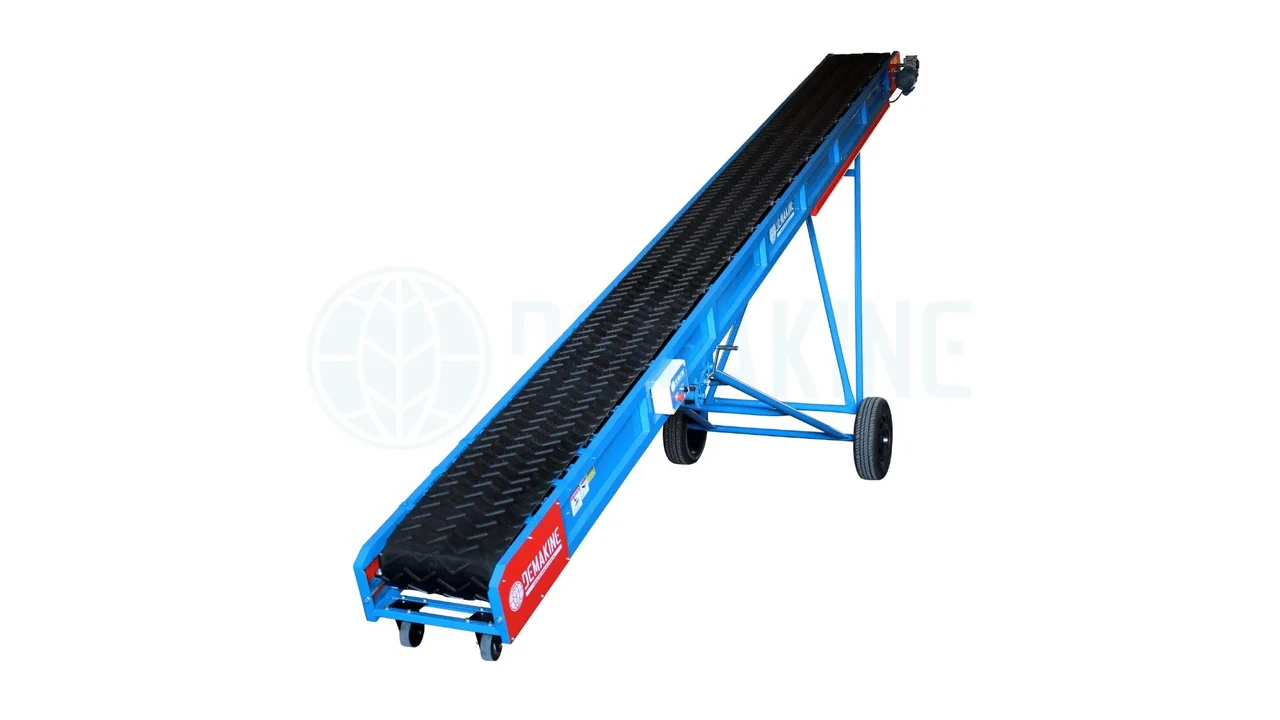
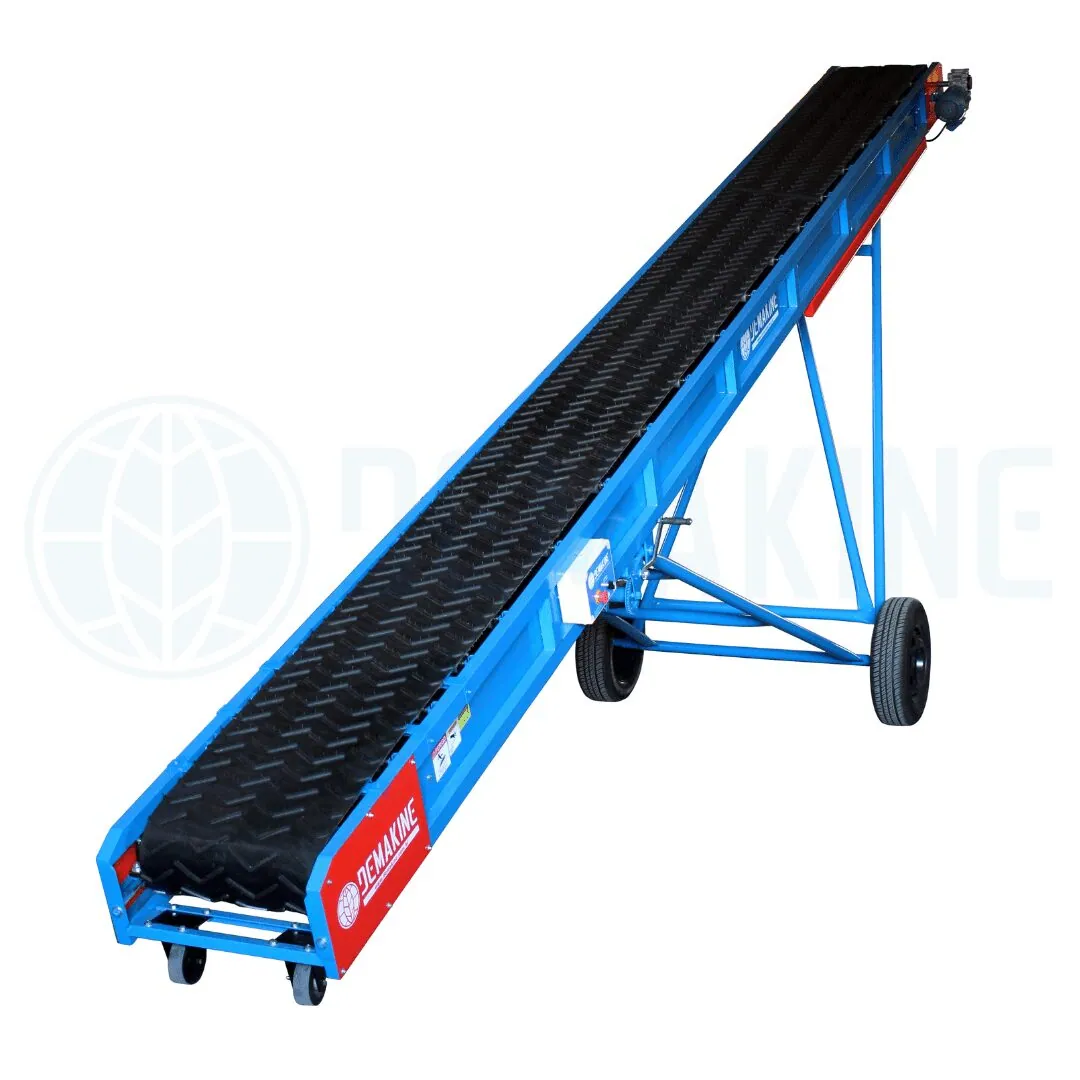
Belt conveyors are the most common and versatile, ideal for conveying a wide variety of materials. They consist of a continuous belt that moves over pulleys and rollers, ensuring smooth, efficient conveying. Within this category, there are subtypes that adapt to different needs:
Elevating conveyors
These conveyors are designed to convey materials between different elevation levels. They are equipped with an adjustment system that can be manual or electric, allowing the height to be changed as needed. They are widely used in processes where materials have to be moved between different floors or platforms, such as vertical production lines or storage systems.
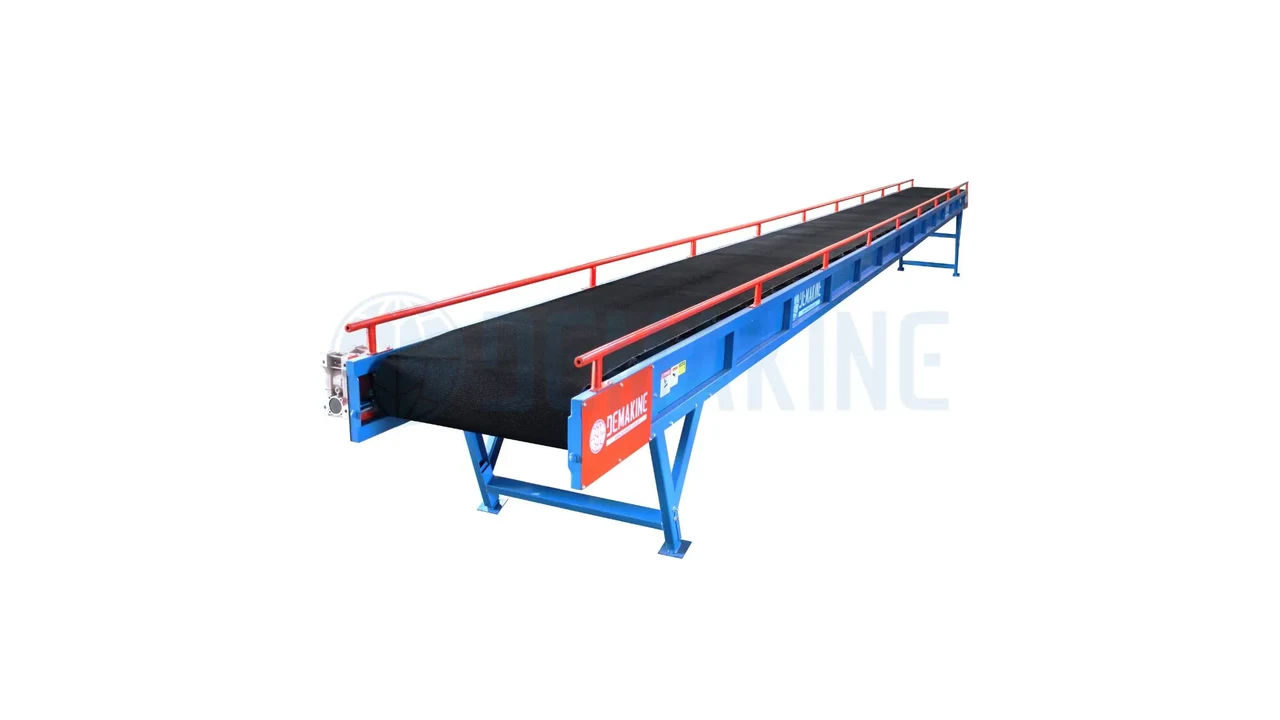
Horizontal conveyors
Ideal for conveying materials in a straight line on a horizontal plane, these conveyors are essential in assembly lines, distribution centers and other environments where continuous, linear movement of materials is needed. They ensure the constant movement of products between different stages of the production process, maintaining operating efficiency.
Articulated conveyors
Made up of segments that can be adjusted to different angles, these conveyors are perfect for layouts that require flexibility in movement. They allow changes of direction or incline, which makes them ideal for industrial plants with complex layouts or layouts that change frequently, making it easier to convey materials along non-linear paths.
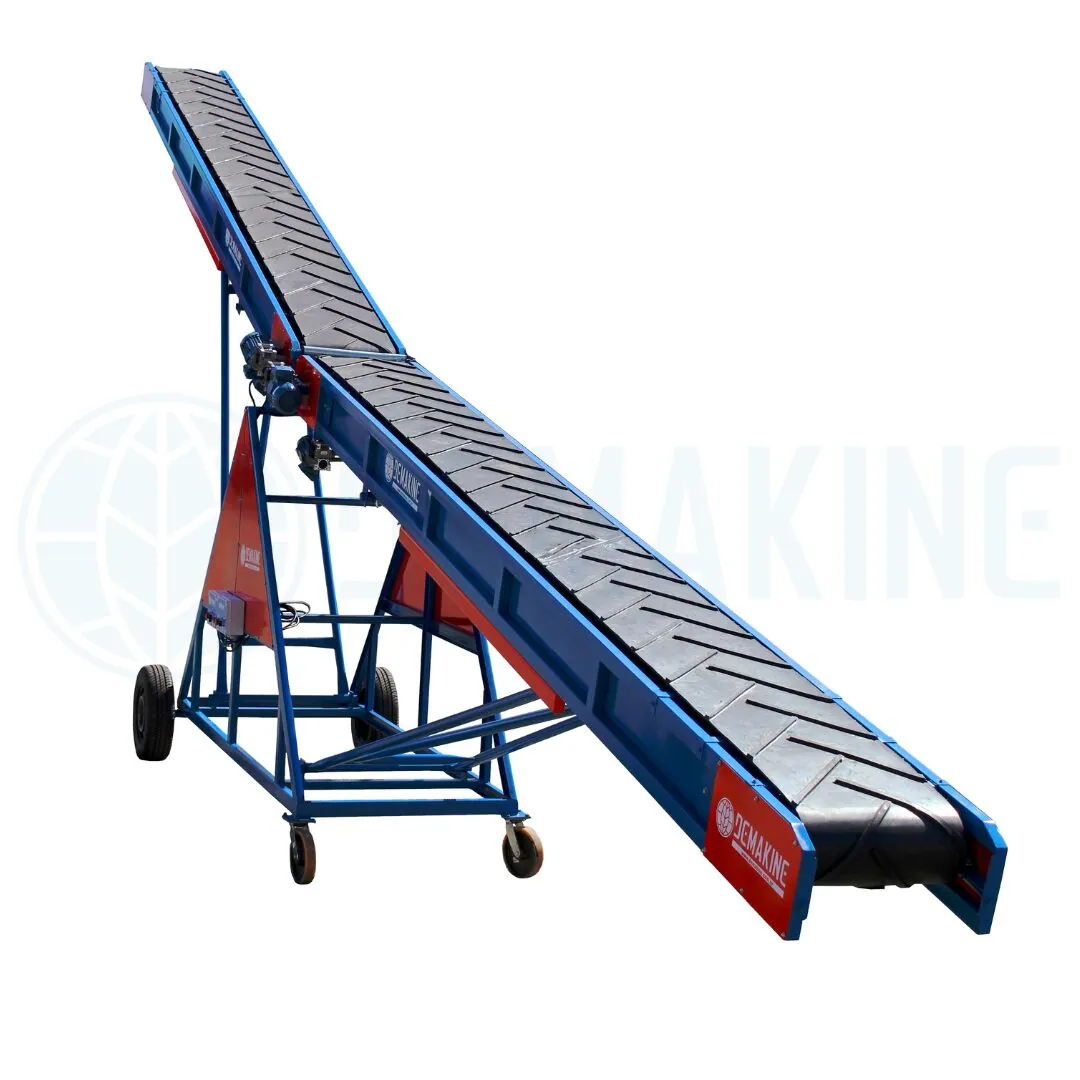
Inclined conveyors
Inclined conveyors are designed to move materials along a fixed angle, without the need for constant adjustment. They are often used in processes that require constant lifting or lowering of products, such as transferring materials to different levels of a production line or loading and unloading at different levels.
Special conveyors
Some industrial operations have specific requirements and need custom-built conveyors. Special conveyors are designed to meet these unique demands, whether through specific materials, custom dimensions or unique features that meet the customer's needs exactly, ensuring maximum efficiency and fit with the process.
2. Roller conveyors
Roller conveyors are sturdier and ideal for conveying heavy loads. They use rollers arranged in series to support and convey the materials. Depending on the application, these conveyors can be configured in different ways:
Gravity roller conveyors
This type of conveyor operates without a drive, allowing materials to move by gravity or be pushed by hand. They are ideal for environments where flow control is not critical, such as storage areas or assembly lines where products need to be moved by hand over short distances.
Powered roller conveyors
Equipped with powered rollers, these conveyors offer precise control over the movement of heavy materials. They are particularly useful in automated processes, where conveying speed and direction need to be regulated to ensure continuous, efficient flow, as in high-volume production lines.
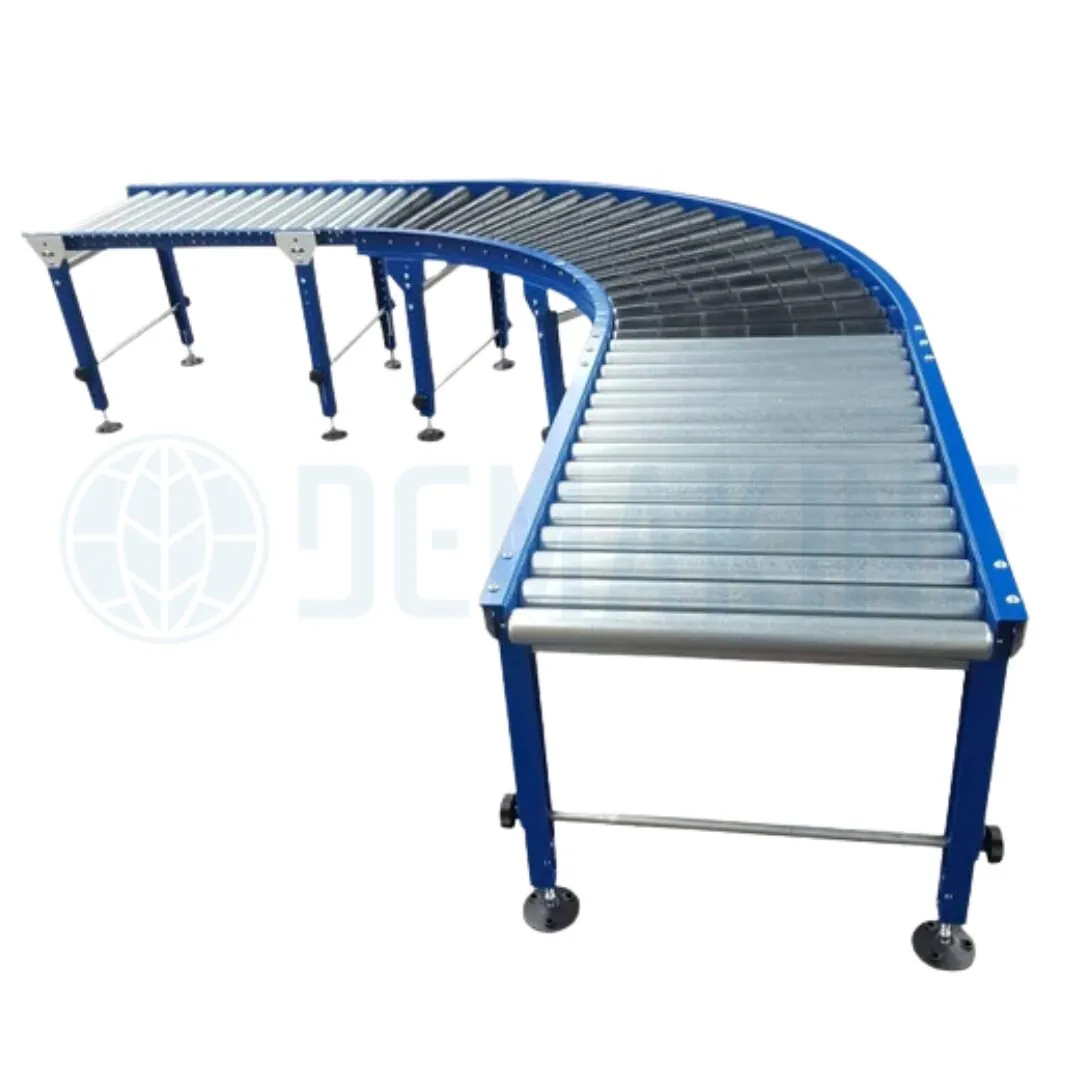
Curved roller conveyors
Designed to change the direction in which materials are conveyed, curved conveyors are essential in industrial facilities where space is limited or the layout requires changes of direction. They allow smooth, continuous movement of materials around curves, without compromising conveying speed or stability.
Flexible/extendable conveyors
Flexible or extendable conveyors are highly adaptable, designed to fit different layouts and distances as needed. They can be extended, retracted and adjusted in shape and length, which makes them ideal for dynamic work environments, such as logistics centers and factories that need conveying solutions that can be quickly set up for different tasks. These conveyors are especially useful where space is limited and flexibility in moving materials is essential to maintain operating efficiency.
Main components
Belt
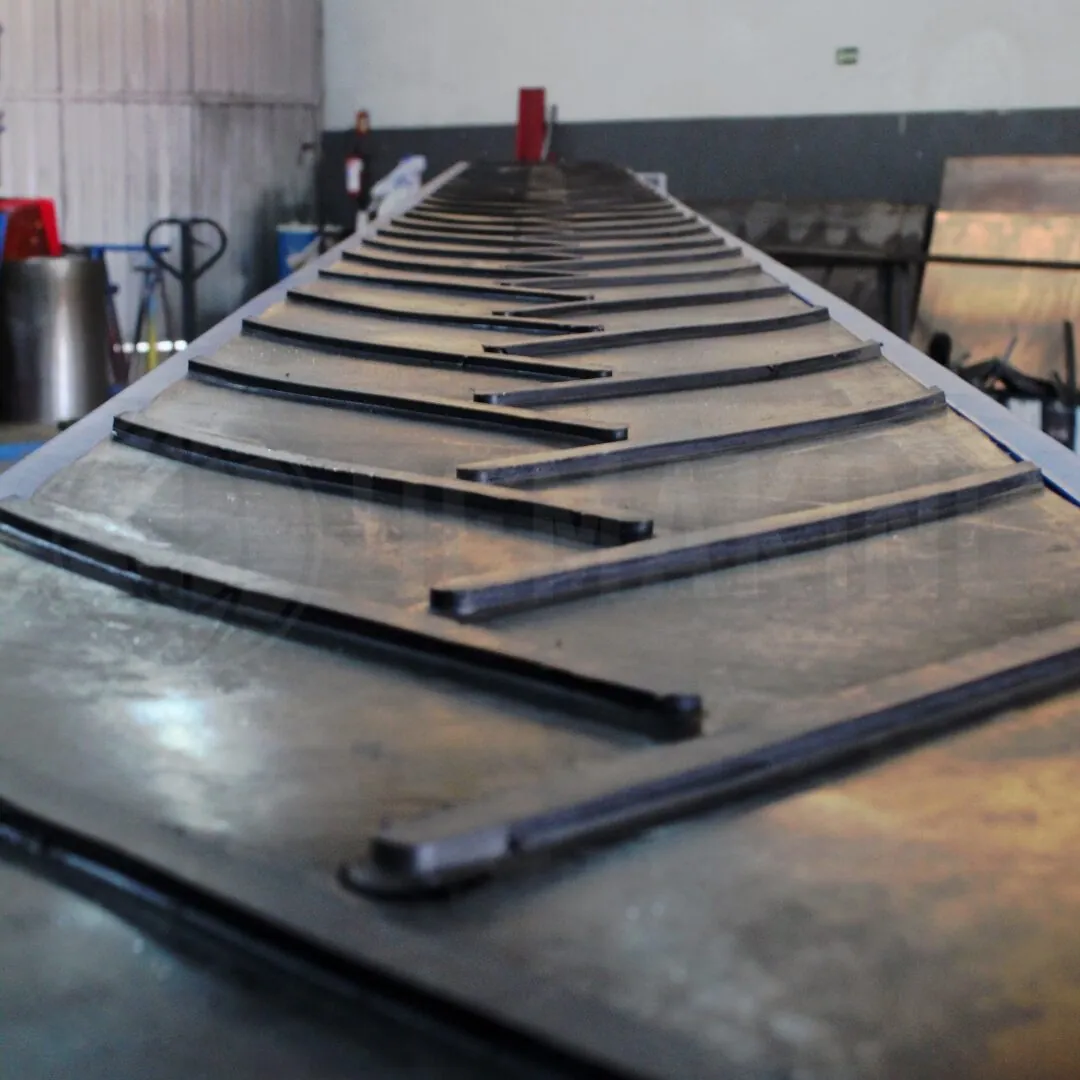
The surface on which materials are conveyed; it can be made of rubber, PVC, metal and other materials.
Structure
The base that supports the belt and the other components.
Gearmotor
Responsible for moving the belt and controlling the speed.
Bearings
Support the shafts and rollers, ensuring smooth rotation.
How belt conveyors work
A belt conveyor works by moving the belt through a drive and pulley system. The material is placed on the belt, which carries it along the defined path. The speed and direction of the belt can be adjusted as needed to meet operating demands.
Benefits of belt conveyors
Efficiency: belt conveyors allow continuous, automated conveying of materials, drastically reducing the time needed to move items from one point to another. This results in a significant optimization of the workflow, allowing production to keep a constant pace without interruptions. In addition, the automation these systems provide reduces the need for manual intervention, freeing the team to focus on higher-value tasks.
Versatility: belt conveyors are highly adaptable and can be customized to convey a wide range of materials, from light, delicate products to heavy, bulky loads. This versatility allows them to be used in different sectors, such as the food, pharmaceutical, mining and logistics industries. In addition, conveyors can be designed to operate in adverse environments, such as high temperatures, corrosive environments or areas with high dust levels, ensuring they meet the specific needs of any operation.
Safety: by reducing the need for manual handling of materials, belt conveyors significantly minimize the risk of work accidents, such as repetitive strain injuries or falling heavy loads. Safety systems, such as automatic stop sensors and protective barriers, can be integrated into the conveyors to prevent incidents, ensuring a safer work environment that complies with regulations.
Preventive maintenance
Preventive maintenance is crucial for belt conveyors to work well. Some essential steps include:
Regular inspection: carry out periodic inspections to check belt tension, the alignment and condition of the rollers, and the state of the bearings. Small faults detected early can be corrected before they cause bigger problems, avoiding unexpected production stoppages.
Lubrication: keeping all moving parts of the conveyor well lubricated is crucial to avoid premature wear and ensure that the components run smoothly. Choosing the right lubricant, depending on the environment and the materials conveyed, can extend the equipment's service life.
Cleaning: regular removal of dirt, dust and debris that build up on the conveyors and components is vital to avoid blockages and operating failures. Cleaning also helps maintain hygienic conditions in industries such as food, where contamination can be a risk.
Tips to maximize service life
Continuous monitoring: implementing a continuous monitoring system to follow the conveyor's performance in real time allows early detection of any anomaly. This makes it easier to make adjustments before small problems turn into major failures.
Employee training: training the team to carry out daily visual inspections and identify signs of wear or malfunction can prevent serious failures and extend the equipment's service life. Well-trained employees can also carry out basic maintenance, reducing dependence on outside services.
Component replacement: establish a schedule for replacing critical components, such as belts and rollers, before they reach the end of their service life. This ensures the conveyor keeps performing efficiently and avoids unscheduled stoppages.
Custom solutions
Belt conveyors play a fundamental role in optimizing industrial processes, but their advantages are even clearer when they are custom-designed to meet the specific needs of each sector. Customizing belt conveyors goes beyond simply adapting size or capacity; it involves a detailed analysis of operations, environmental conditions and performance requirements to create a solution that maximizes efficiency and minimizes operating costs.
Choice of materials: the selection of materials for building the conveyor is crucial to ensure durability and performance. For example, in the food industry, materials such as stainless steel are often used because of their corrosion resistance and ease of cleaning, while in mining, belts reinforced with high-strength components are essential to withstand abrasive wear. In addition, belts can be designed to resist chemicals, high temperatures or wet environments, according to the customer's needs.
Conveyor layout: the layout of a belt conveyor can be adjusted to fit the available space and the facility's workflow. Elevating, inclined, articulated or curved conveyors can be implemented to maximize the use of space, make changes of direction and level easier and ensure continuous movement of materials in complex environments. This level of customization is particularly useful in factories with complicated or constantly changing layouts, where flexibility and efficiency are essential.
Load capacity and speed: the conveyor's load capacity and speed are customized to meet the specific demands of the production process. Conveyors designed for heavy loads are equipped with reinforced components, such as high-strength rollers and belts, while conveyors for light materials can prioritize conveying speed and agility. In addition, electronic control systems can be integrated to adjust conveying speed in real time, allowing greater control over the flow of materials and synchronization with other stages of the production process.
Specialized consulting: Demakine offers specialized consulting to develop custom solutions that meet each customer's specific needs. This includes a detailed analysis of existing operations, identification of areas for improvement and development of projects that align the conveyors' functionality with the company's strategic goals. The consulting can also involve training for the team, installation assistance and ongoing technical support to ensure that the solutions implemented operate at maximum efficiency.
With the right customization, belt conveyors become a powerful tool to achieve an industrial operation that is efficient, safe and adapted to each customer's specific needs. Demakine, with its experience and expertise, is ready to provide made-to-measure solutions that drive the success of your industrial projects.
Conclusion
Belt conveyors are fundamental to operating efficiency in many industries. With proper maintenance and the right choice of components, it is possible to maximize their durability and performance. Investing in custom solutions and in team training are essential steps to ensure long-term success.
For more information and solutions, contact us.
Gallery

Need to apply this to your operation?
Our engineering team assesses your process and recommends the right equipment, including custom-built projects.