Technical guide
How to choose the ideal belt conveyor for your company
Published on September 12, 2024 · Demakine Team

Knowing how to choose the ideal belt conveyor for your company can directly impact the operating efficiency, safety and profitability of your business. With so many options and specifics, making the right choice requires a detailed analysis of several factors. In this article, we explore all the aspects you need to consider to make sure the conveyor you choose is the ideal one for your operation's needs.
1. Understand your needs
First of all, it is essential to understand the particularities of your operation. This detailed understanding will guide all the following decisions, ensuring that the conveyor chosen not only meets but exceeds your expectations. Consider the following aspects:
What type of material will be conveyed? The type of material (boxes, bags, grains, liquids, etc.) directly influences the choice of the conveyor's model and material.
What is the daily conveying volume? Assess the amount of material to be conveyed per day, hour or minute. This will determine the conveyor width, the motor power and the operating speed. In operations with variable volumes, conveyors with automatic speed adjustment can be an advantage.
What are the environmental conditions? The work environment directly impacts durability and the choice of conveyor material. Environments with high humidity, exposure to chemicals, temperature variations or outdoor operation require specific materials and extra protection.
Our team of specialists is ready to help identify the specific needs of your operation and recommend the most suitable solution.
2. Choose the type of conveyor
There is a wide variety of conveyors available, each designed to meet specific needs. The right choice can significantly increase productivity and reduce operating costs. Here are the most common types:
Roller conveyors: used mostly to convey rigid products with regular shapes, such as boxes and pallets. They can be powered or gravity rollers, depending on the layout of the operation.
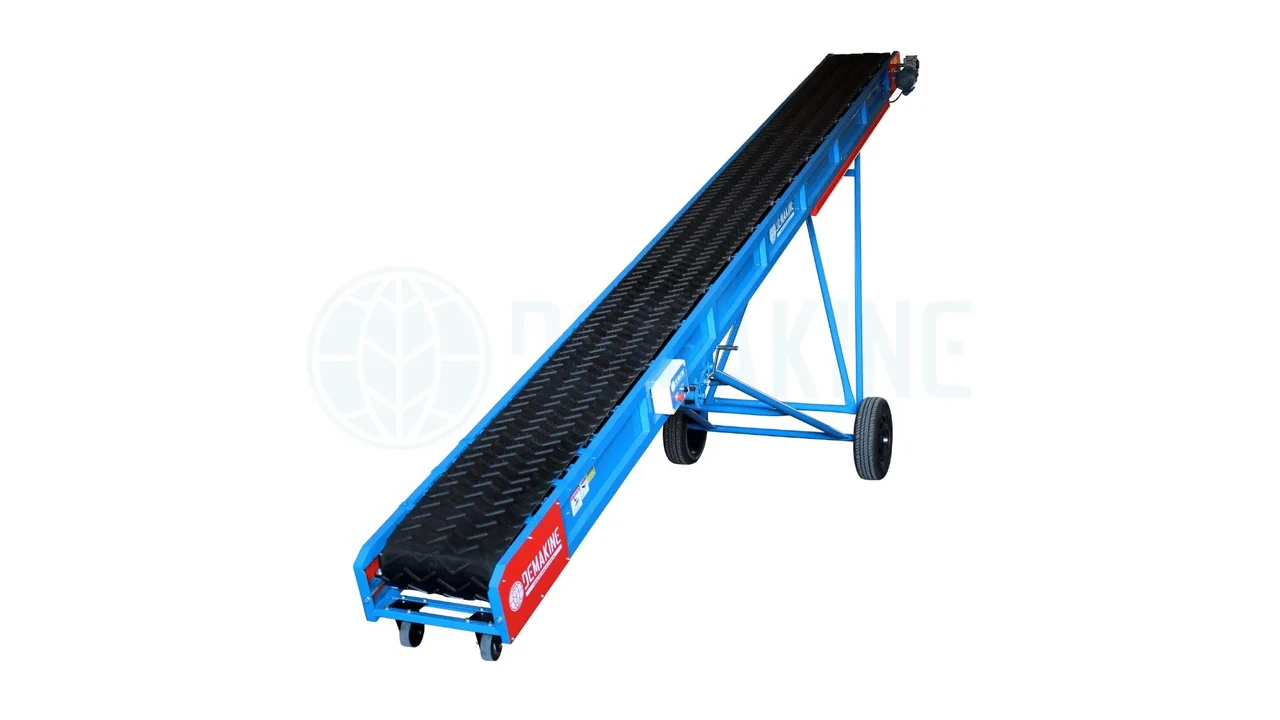
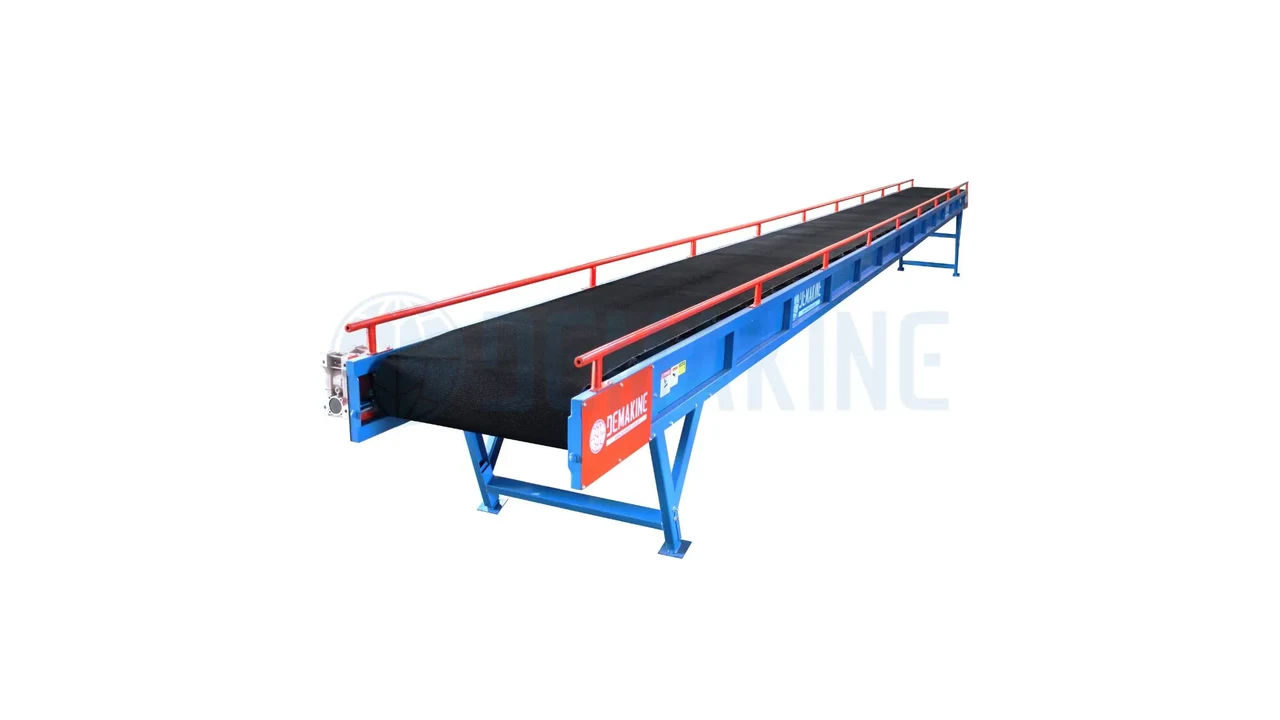
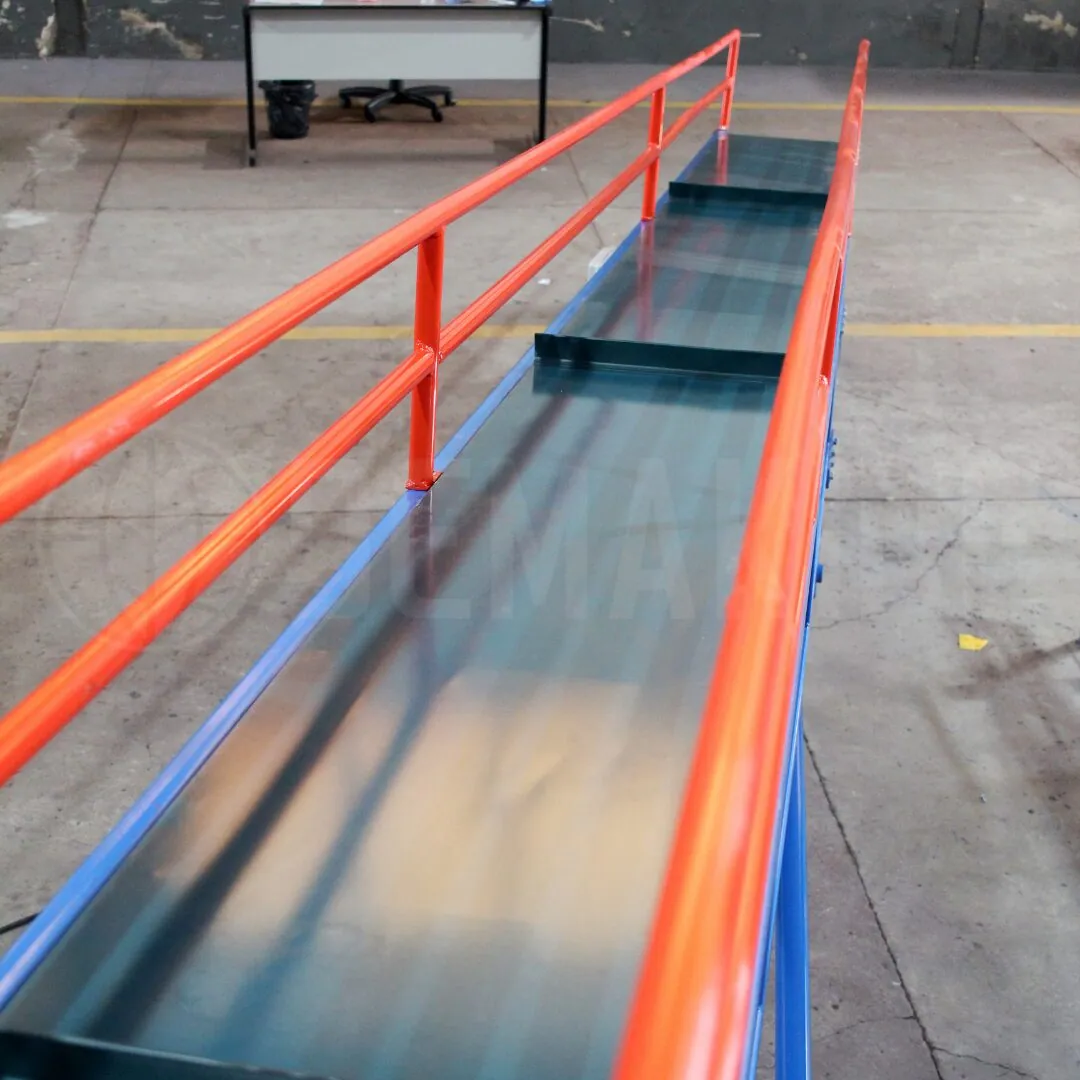
Belt conveyors: highly versatile, they are ideal for conveying a wide range of products, from small items to large volumes. The belts can be made of different materials (rubber, PVC, metal) to meet the specific conditions of each operation.
Demakine offers a complete range of options, adapted to your specific needs, ensuring the choice of the ideal conveyor for your business.
Check out our Complete Guide to Belt Conveyors and learn all about each type of conveyor, its specifics and how it can optimize your operations.
Open the guide
3. Assess the conveyor material
The choice of conveyor material directly impacts the equipment's durability, performance and maintenance. The most used materials include:
Stainless steel: ideal for environments that require high corrosion resistance, such as the chemical, pharmaceutical and food industries. This material is easy to clean and highly durable, even in adverse conditions.
1020 carbon steel: offers a combination of sturdiness and workability and is recommended for operations where mechanical strength is crucial but the environment is not corrosive.
4. Consider safety
Safety is non-negotiable when choosing a belt conveyor. Inadequate systems can lead to serious accidents, resulting in financial and legal losses. Make sure the conveyor chosen includes:
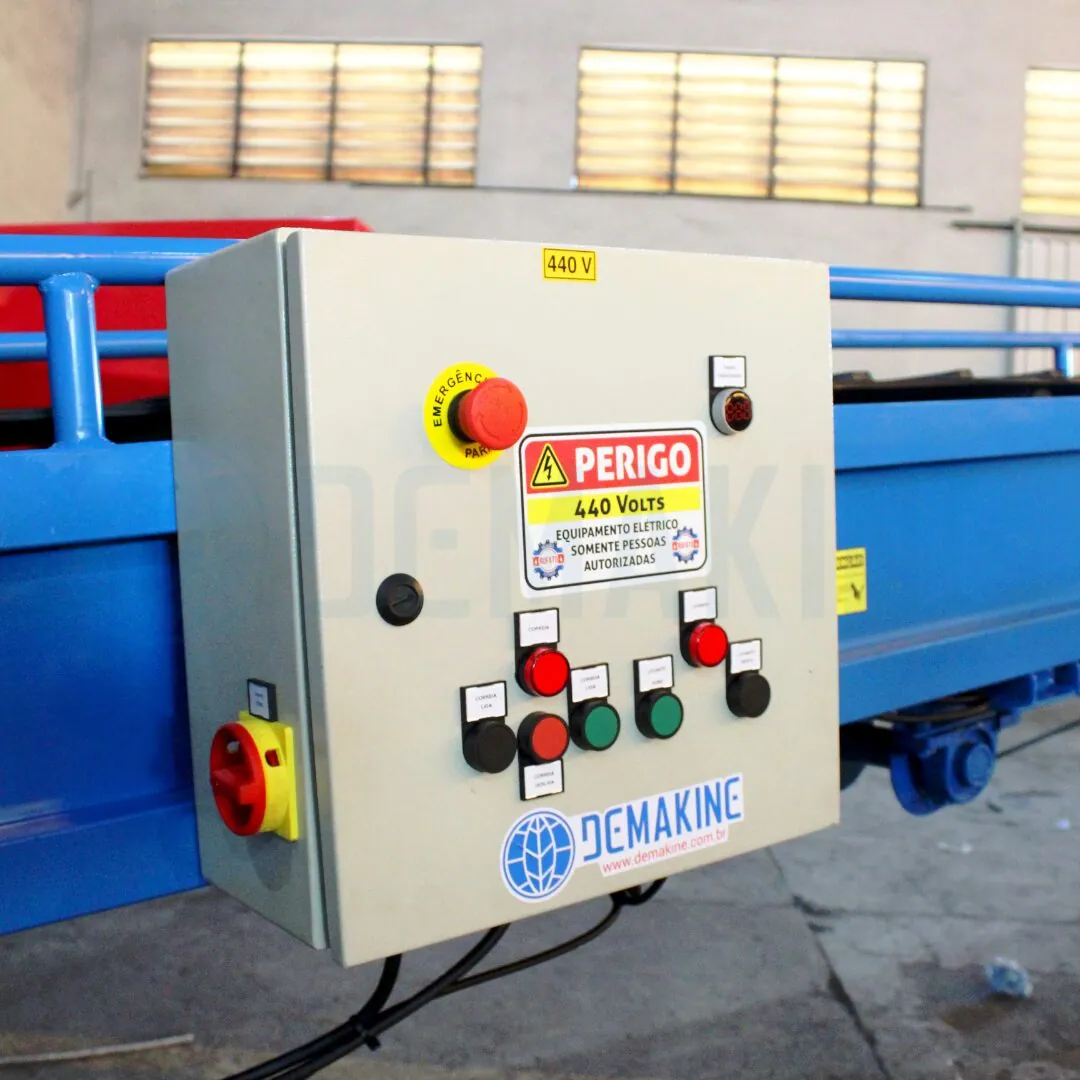
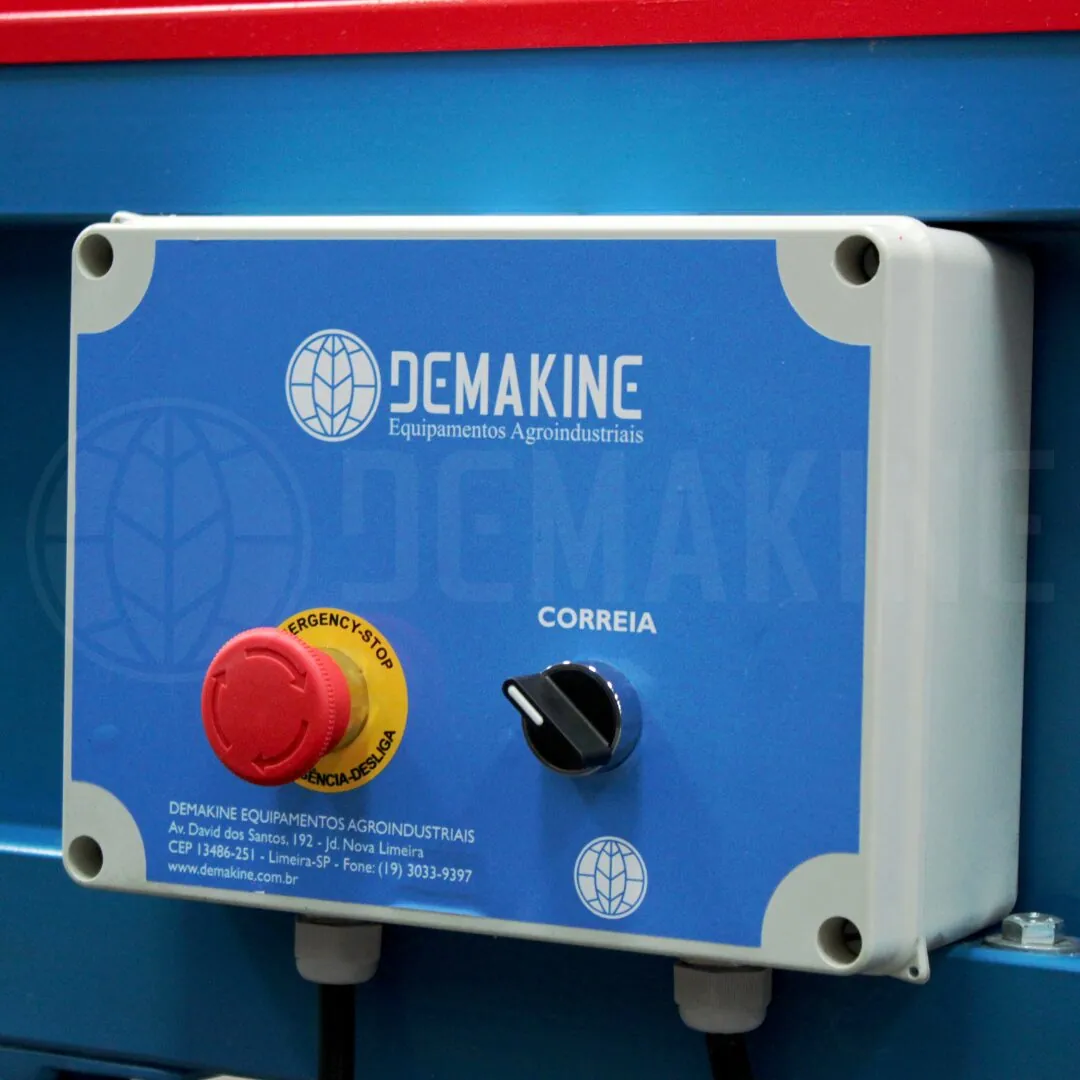
Emergency stop systems: essential to prevent accidents, these systems stop the conveyor immediately.
Side guards: they prevent materials from falling, protecting both the operators and the product conveyed.
Clear signage: clear, visible warnings are fundamental for operator safety, especially in risk areas.
Our conveyors are designed to strict safety standards, ensuring a safer, more efficient work environment.
Emergency stop
Side guards
Clear signage
5. Think about maintenance and support
Regular maintenance is essential to extend the service life of your conveyor and avoid unplanned stoppages that can interrupt production. At Demakine, we understand the importance of ongoing support and offer:
Maintenance service and technical support: our team of highly qualified technicians is available to solve problems, ensuring your operation keeps running without interruptions.
Easy access to spare parts: keeping a stock of critical parts can make the difference between a short stoppage and a significant loss of productivity.
6. Assess value for money
When assessing the cost of a belt conveyor, do not limit yourself to the initial price. Consider the total cost of ownership, which includes maintenance, energy consumption, durability and operating costs over time. A higher initial investment in a quality conveyor can result in substantial savings in the future.
Demakine stands out for offering solutions with excellent value for money, supplying high-quality equipment that ensures not only the return on investment but also lower operating costs in the long term.
7. Consult a specialist
Still unsure which conveyor to choose? Our team of specialists is available to offer technical advice, make on-site visits and develop made-to-measure solutions for your specific needs.
Our personalized advice ensures that you will find the perfect belt conveyor, optimized for maximum efficiency and safety.
Conclusion
Choosing the ideal belt conveyor for your company is a strategic decision that requires a detailed analysis of multiple factors. With Demakine, you can be sure you are investing in a sturdy, safe and efficient solution. Contact us to learn more about how we can transform your company's logistics efficiency.
Gallery

Need to apply this to your operation?
Our engineering team assesses your process and recommends the right equipment, including custom-built projects.